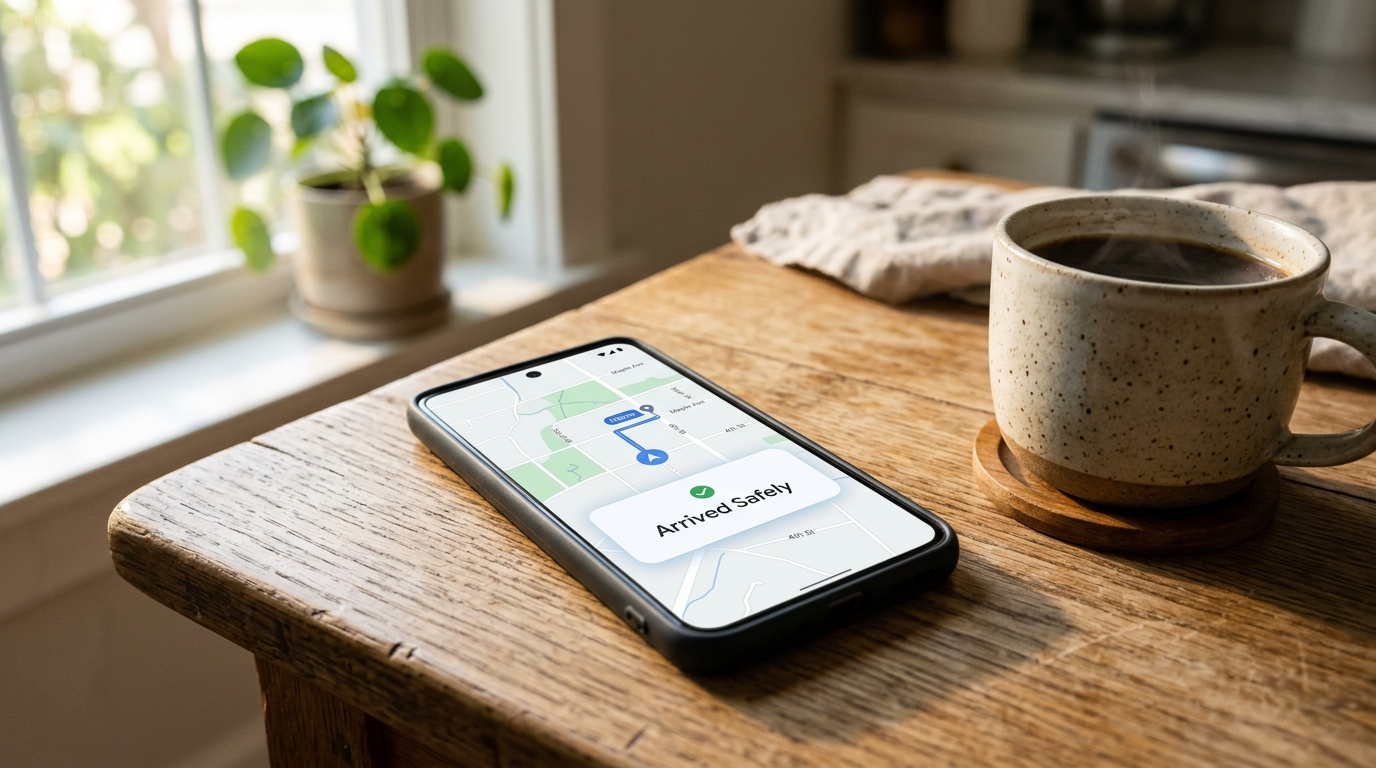
Actualiser sans cesse une carte pour vérifier la position de votre famille ne vous fait pas vous sentir plus en sécurité : cela augmente en réalité votre anxiété. Pour remédier à ce poids psychologique, Find : Localisateur de Famille a introduit les Analyses de Routine Intelligentes. Cette fonctionnalité déplace l'attention des points GPS bruts et réactifs vers des alertes prédictives et intelligentes qui maintiennent les familles connectées sans stress. En tant que chercheur en technologie analysant l'analyse de données et le comportement des utilisateurs, je passe mes journées à observer comment les familles interagissent avec leurs environnements numériques. Ce que je constate systématiquement, c'est que les données brutes sans contexte sont pratiquement inutiles en cas de panique.
Lorsqu'un adolescent a vingt minutes de retard en rentrant de l'entraînement, les parents ne veulent pas seulement des coordonnées géographiques. Ils veulent savoir si leur enfant est coincé dans un trafic normal, s'il est encore à l'école ou s'il s'écarte complètement de son itinéraire habituel. C'est exactement le problème que nous avons voulu résoudre.
Les données de localisation brutes créent plus d'anxiété que de rassurance.
Pendant des années, l'approche standard de la sécurité familiale reposait sur les paramètres par défaut passifs des systèmes d'exploitation. Si vous aviez besoin de savoir où se trouvait quelqu'un, vous ouvriez Localiser mon iPhone ou Google Maps pour chercher un indicateur statique. Bien que ces outils soient excellents pour la cartographie de base, ils ne sont pas conçus pour fournir un contexte comportemental.
Fixer un écran et regarder un point se déplacer lentement sur une autoroute vous oblige à interpréter activement la situation. Roulent-ils trop vite ? Ont-ils manqué leur arrêt ? Cette surveillance active exige une attention constante, transformant un simple trajet en une séance de surveillance stressante. En période d'inquiétude, les gens ont souvent recours à tous les outils à leur disposition, jonglant entre Waze pour les mises à jour du trafic et les cartes standard pour l'itinéraire. Certains essaient même d'effectuer une recherche rapide de personnes ou une recherche inversée de numéro lorsqu'un numéro inconnu les appelle pendant une période d'incertitude. Aucune de ces actions isolées ne répond réellement à la question fondamentale : « Est-ce que mon proche est en sécurité et en route ? »
La transparence en matière de confidentialité booste l'adoption des applications modernes.
Un changement significatif s'opère dans la perception du suivi numérique par les utilisateurs, et les données le confirment. Selon les projections de l'étude « Mobile App Trends » publiée par Adjust, l'écosystème mobile connaît une transition vers une confidentialité accrue et un consentement renforcé de l'utilisateur. Leur analyse suggère que les sessions d'applications mondiales augmentent et, fait notable, que les taux d'acceptation de l'App Tracking Transparency (ATT) d'iOS grimpent à mesure que les utilisateurs se sentent plus à l'aise pour partager leurs données lorsque la valeur ajoutée est claire.
Que nous disent ces données ? Elles prouvent que les utilisateurs — y compris les adolescents et les jeunes adultes soucieux de leur vie privée — sont de plus en plus disposés à partager leurs empreintes numériques, à condition qu'il y ait de la transparence et un bénéfice mutuel. L'ère du suivi secret et unilatéral touche à sa fin. Les familles veulent des outils de coordination numérique fonctionnant sur la base du consentement mutuel, plutôt que d'avoir l'impression que quelqu'un regarde constamment par-dessus leur épaule.
Cette attente évolutive a façonné la manière dont nous avons construit notre écosystème mobile plus large chez Frontguard. Nous avons réalisé que pour qu'une application de localisation reste installée sur l'appareil d'un jeune adulte, elle doit respecter son autonomie tout en offrant la rassurance dont les parents ont besoin.
Les Analyses de Routine Intelligentes passent du suivi à la coordination.
Find : Localisateur de Famille est une application iOS et Android conçue pour coordonner les routines familiales quotidiennes et protéger les appareils personnels via une cartographie unifiée. Pour remédier à la fatigue liée aux vérifications manuelles constantes, la dernière mise à jour introduit les Analyses de Routine Intelligentes.
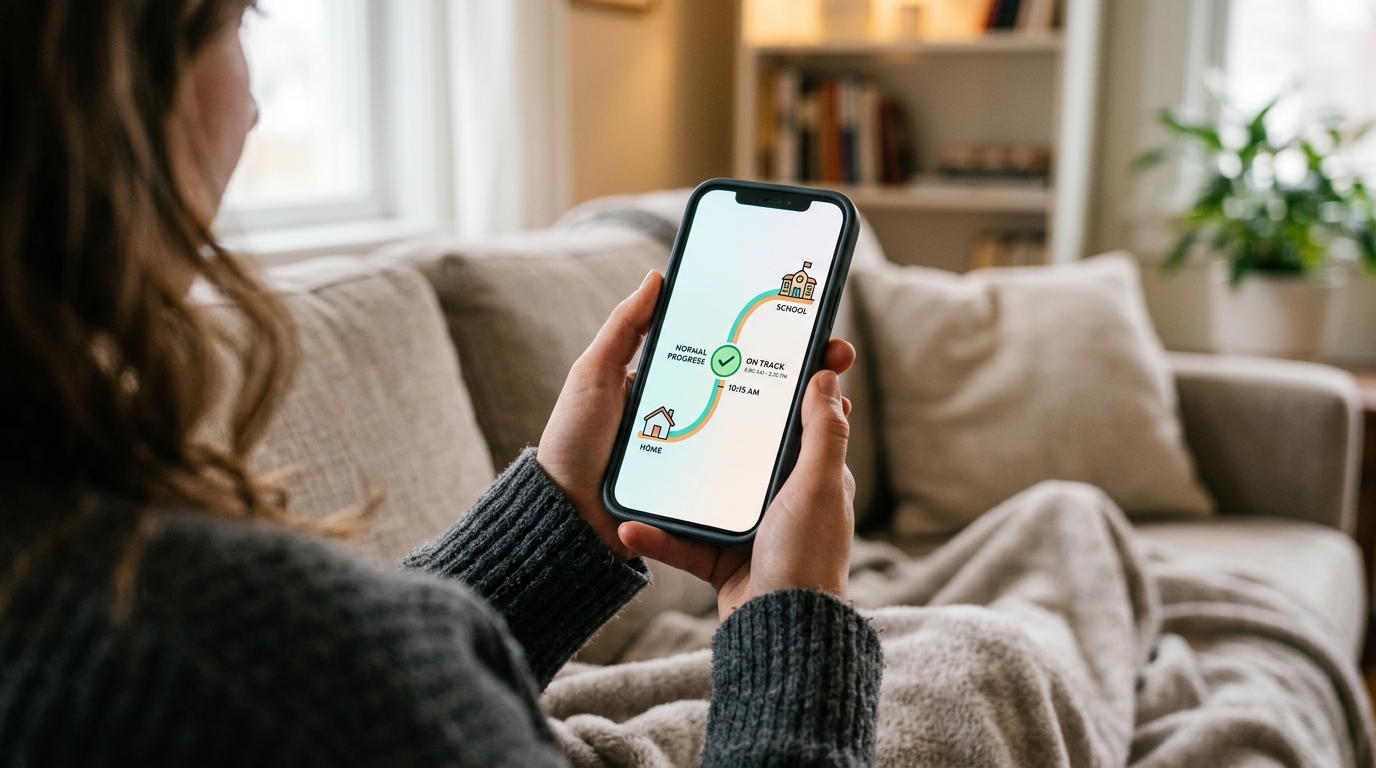
Au lieu de vous obliger à ouvrir l'application pour une vérification manuelle, le système utilise la reconnaissance de modèles sur l'appareil pour apprendre les itinéraires quotidiens standards. Il comprend le trajet habituel vers l'école, la séance hebdomadaire à la salle de sport et l'itinéraire classique pour aller au travail. Une fois ces modèles établis, l'application fonctionne discrètement en arrière-plan.
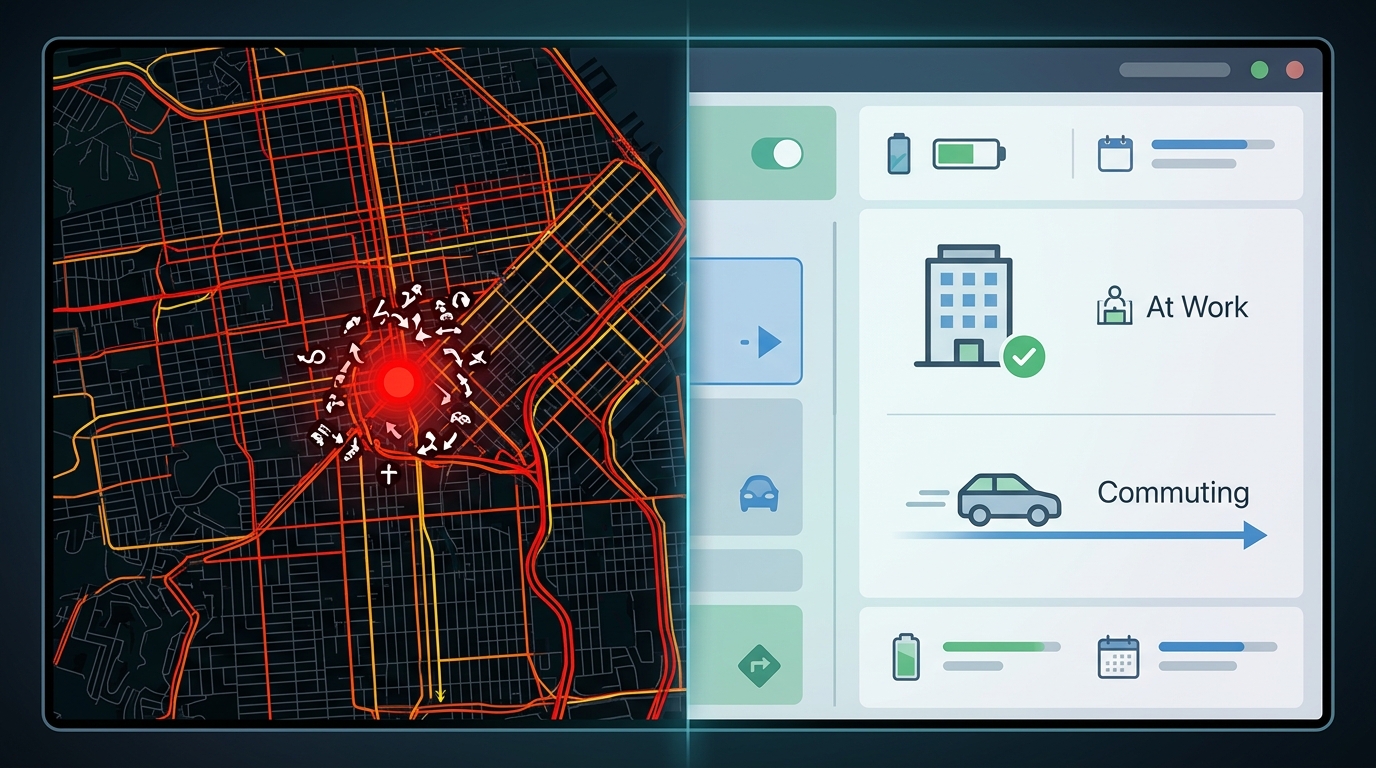
Vous ne recevez une notification que si quelque chose sort de la norme établie. Si votre partenaire quitte le travail mais que son trajet prend trente minutes de plus que d'habitude en raison d'un accident, l'application vous alerte. Vous n'avez pas besoin de chercher frénétiquement les coordonnées téléphoniques de son bureau ou de consulter compulsivement Localiser mon iPhone. Le système vous fournit directement le contexte. Cela s'aligne sur la tendance de l'industrie vers l'analyse assistée par IA : les applications doivent faire le gros travail d'analyse des données pour que l'utilisateur n'ait pas à le faire.
Le contexte importe plus que les coordonnées exactes.
La différence entre un outil de coordination intelligent et un localisateur générique devient évidente lors des imprévus quotidiens. Imaginons que vous perdiez un appareil. Votre réaction immédiate pourrait être de chercher un portail localiser mon téléphone ou trouver mon appareil. Bien que Find : Localisateur de Famille gère la récupération d'appareils avec une précision extrême, sa véritable valeur réside dans sa gestion des personnes.
De nombreux utilisateurs s'accrochent encore à des méthodes obsolètes. Ils peuvent tenter une recherche de numéro de téléphone ou s'appuyer sur un annuaire de recherche de personnes lorsqu'ils ne parviennent pas à joindre un membre de leur famille. Ce sont des outils statiques et rétrospectifs. Ils vous disent à qui appartient un numéro, mais pas où se trouve la personne qui détient ce téléphone à l'instant T. En intégrant les Analyses de Routine Intelligentes, Find élimine les suppositions. Il comble le fossé entre les données géographiques brutes de Life 360 ou Localiser et la réalité humaine d'être coincé dans une file d'attente au supermarché.
J'ai récemment analysé ce chevauchement comportemental spécifique, comme je l'ai exploré dans mon précédent article sur l'importance des cartes familiales unifiées. Lorsque vous cessez de passer d'une application à l'autre pour obtenir une seule réponse, votre stress numérique quotidien chute de manière significative.
Choisir le bon système nécessite un consentement mutuel.
Il est tout aussi important de définir à qui cette technologie n'est pas destinée. Find : Localisateur de Famille est strictement conçu pour les familles consentantes, les partenaires et les équipes soudées. Il n'est pas fait pour les employeurs cherchant à surveiller secrètement les déplacements de leur personnel le week-end, ni pour les individus tentant de suivre un adulte non consentant. La fonction d'Analyses de Routine Intelligentes nécessite un partage de localisation transparent et bidirectionnel pour fonctionner de manière optimale. Si vous cherchez un outil d'espionnage caché, vous devrez chercher ailleurs.
Lors de la sélection d'une plateforme de sécurité familiale, vos critères devraient se baser sur la communication proactive plutôt que sur la surveillance réactive. Posez-vous la question : cette application réduit-elle mon temps d'écran ? Me prévient-elle uniquement lorsque c'est nécessaire ? Respecte-t-elle la vie privée des personnes avec qui je me coordonne ? Si vous voulez une véritable tranquillité d'esprit sans le fardeau d'un monitoring constant, le système d'alerte prédictive de Find est conçu spécifiquement pour ce résultat.
Améliorer le filet de sécurité numérique de votre famille nécessite de dépasser les bases. Mon collègue Burak Aydın a détaillé les étapes fondamentales de cette transition dans son guide, Optimisez votre suivi familial. Une fois ces bases établies, l'adoption des analyses prédictives est l'étape suivante naturelle. En laissant des algorithmes intelligents analyser la routine, vous pouvez enfin poser votre téléphone et avoir l'assurance que vous serez alerté au moment exact où l'on aura besoin de vous.