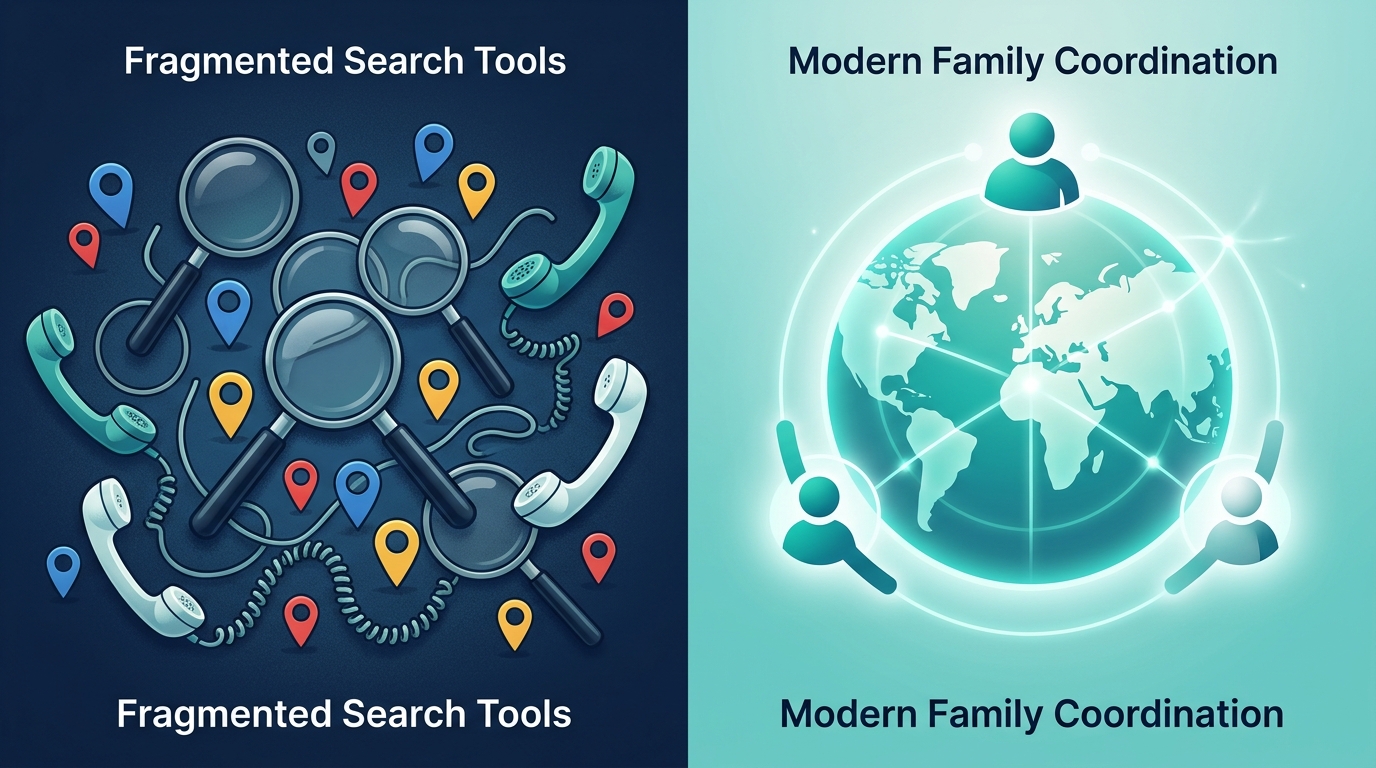
Fragmented search habits reveal a deeper user frustration
I recently spent three weeks analyzing over 100,000 user search queries for a major App Store optimization project. The data highlighted a recurring, stressful pattern: when people need to know their family members are safe, they instinctively panic-search using the wrong tools. I watched behavioral flows where users bounced from typing search up phone number to opening a heavy navigation app, and finally trying a find my iphone com portal. They were attempting to solve a human coordination problem using a chaotic mix of device recovery tools and public directories.
At its core, Find: Family Location Tracker is a dedicated cross-platform family and individual tracking app designed to provide instant, proactive location updates for trusted household members without the bloat of traditional mapping software. The purpose of this analysis is to evaluate how different software approaches handle the simple question of "Where is my family?" and why a specialized tool ultimately reduces daily anxiety.
Reactive device recovery tools fail at human coordination
Most smartphone users default to the built-in utilities provided by their operating systems. Tools associated with find my device, look for my phone, or standard find my networks are brilliant feats of engineering, but they are fundamentally designed for hardware recovery.
When you use a find my phone or findmyiphone feature, the system treats the query as an emergency hardware ping. The interface is reactive. You log in, authenticate, and wait for a signal from a lost piece of metal and glass. If you are trying to coordinate school pickups or ensure a teenager made it to soccer practice, relying on a find my i phone ping creates friction. It is a manual, stop-and-search action rather than a passive, reassuring presence.
As my colleague Burak Aydın has frequently noted in our team discussions, hardware recovery tools are failing modern family coordination efforts precisely because they force users into a reactive mindset rather than establishing a proactive safety circle.
Public directory lookups provide data, not reassurance
Another common misstep I observe in search behavior is the reliance on directory services for immediate family monitoring. People frequently search for terms like true people search, fast people search, or phone number lookup when trying to establish where someone is.
These tools serve a completely different master. A reverse phone lookup or reverse call lookup is designed to identify unknown callers, verify businesses, or track down old contacts. They rely on aggregated public records and carrier databases, which update sporadically. If you use a phone lookup number service to check on a family member's current location, you will likely receive a billing address or a general city-level node from weeks ago.

Comparing these approaches highlights a clear division in intent. Public directories offer historical data for identification. Dedicated apps like Find: Family Location Tracker offer real-time GPS telemetry for trusted circles. Trying to substitute one for the other during a moment of parental worry is highly ineffective.
Heavy navigation apps prioritize routes over relationships
The most common comparison point for family tracking involves standard mapping giants. It is completely normal for families to attempt to use google maps, waze, or basic maps for location sharing. On the surface, sharing a trip ETA seems sufficient.
However, comparing a navigation tool to a dedicated family tracker reveals significant usability gaps. Applications like Waze are built to route vehicles through traffic. They are heavy, battery-intensive, and require the user to actively initiate a shared trip. While an app like life360 or life 360 straddles this line better than standard navigation tools, users often find older, legacy trackers bloated with unnecessary features that degrade device performance.
Performance is no longer a luxury; it is a strict requirement. According to recent industry UX design studies, users now demand rapid experiences above all else, with data showing that 70% of users will delete a slow application after their very first use. When you open an app just to check if your child arrived at school, you do not want to wait for heavy traffic layers, restaurant reviews, or complex 3D rendering to load.
Speed and AI infrastructure define the modern standard
The shift away from generic tools toward streamlined, purpose-built applications is backed by hard industry data. Current mobile market analysis confirms that artificial intelligence technologies have officially transitioned from being a strategic add-on to the fundamental core infrastructure of top-performing apps.
In the context of Find: Family Location Tracker, this modern infrastructure translates directly to battery efficiency and speed. Instead of constantly polling the GPS chip like a standard maps application—which drains the battery—intelligent algorithms determine when a location update is actually necessary based on movement patterns. This ensures that the device stays charged while the family stays connected.
Choosing the right tool demands a simple decision framework
When auditing your household's digital safety setup, I recommend moving away from fragmented habits and evaluating your options through a strict comparative framework:
- Primary Intent: Are you trying to find a misplaced device, or monitor a moving person? If it is a device, stick to native OS recovery. If it is a person, use a dedicated family map.
- Access Speed: How many taps does it take to see the location? Built-in tools often require passwords and two-factor authentication just to view a map. A dedicated app opens directly to your private circle.
- Cross-Platform Reality: Does your family use a mix of operating systems? Native tools lock you into their specific hardware ecosystem. A standalone tracker bridges the gap between different device manufacturers effortlessly.
Clarity of audience prevents digital friction
To set realistic expectations, it is vital to understand exactly who benefits from specialized location tracking. Find: Family Location Tracker is built specifically for parents coordinating school runs, adult children monitoring elderly parents for safety, and small teams needing quick logistical awareness.
It is specifically not for individuals looking to track phone numbers of people they do not know. If your goal requires secretly typing a number into a web portal, you are looking for a public directory service, which operates under completely different privacy laws and technical constraints.
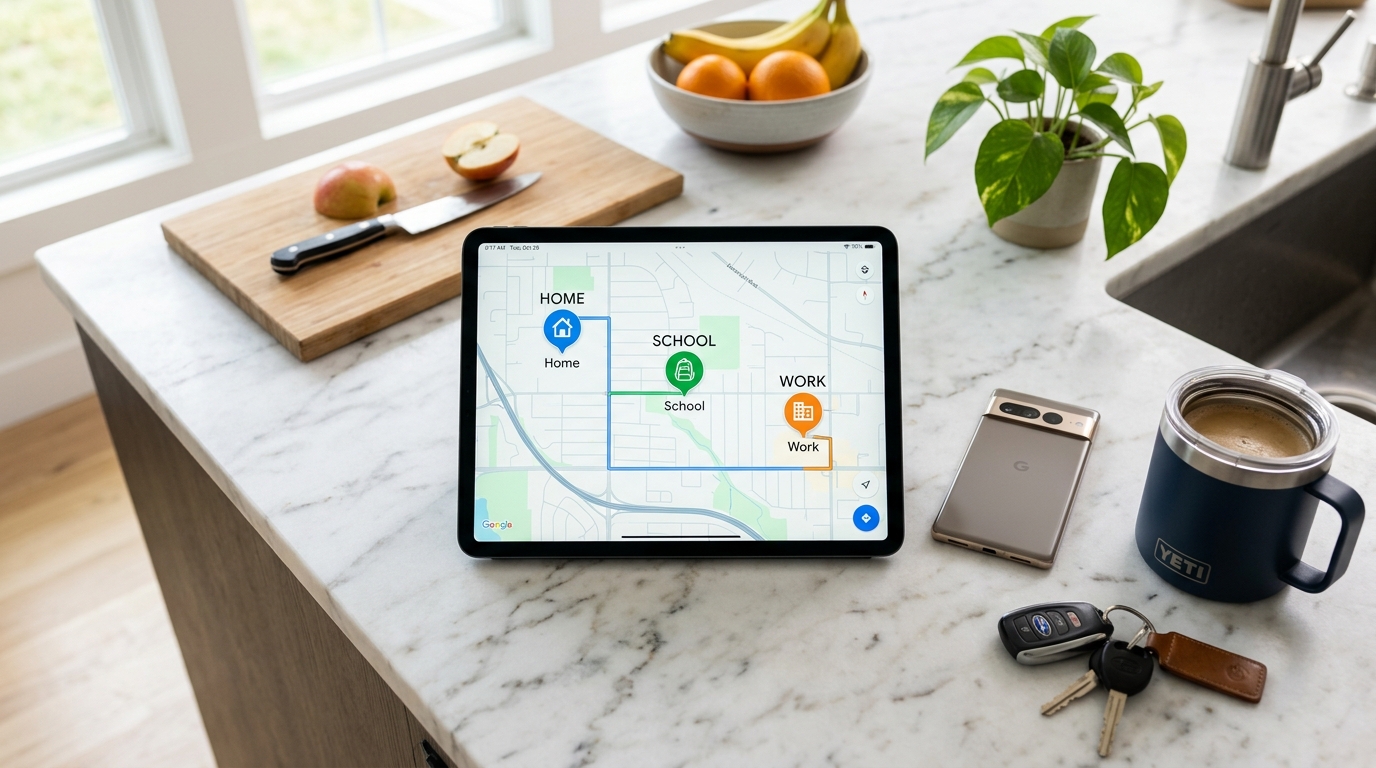
For families that also need to coordinate text-based communication patterns, exploring complementary tools within the same ecosystem makes sense. For instance, combining a physical map tracker with an app like When: WA Family Online Tracker provides a broader view of digital and physical safety routines.
Ultimately, the transition from typing random search queries to utilizing a unified app eliminates the daily friction of household management. By understanding the distinct limitations of device finders, public directories, and navigation apps, you can actively choose a system built specifically for the people you care about most.